
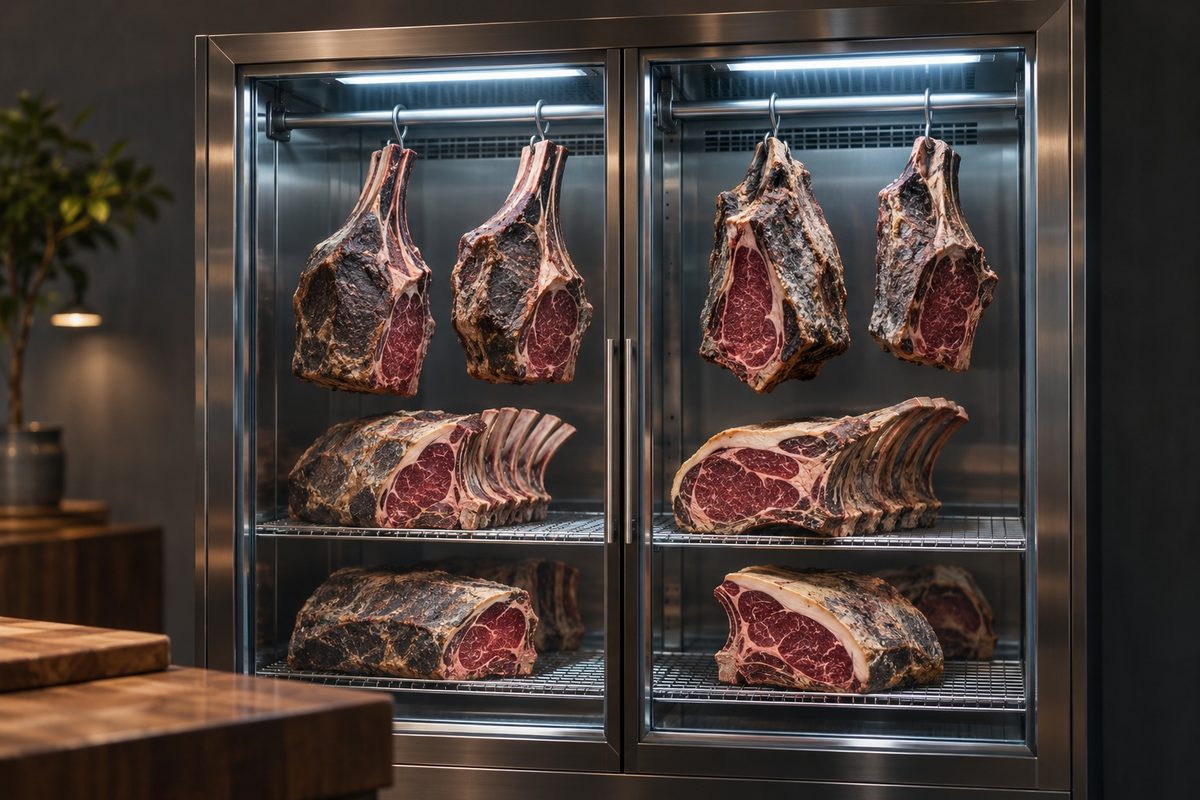
Dry-aged beef is beef that has been hung in a cold, controlled room for several weeks before it is cut. At Reilly's, our steaks and best roasting joints are dry aged for 28 days or more. In that time the beef loses moisture, which concentrates the flavour, and its natural enzymes relax the muscle, which makes it more tender.
What happens during dry ageing?
- Moisture leaves the meat. Beef is about three quarters water. As some of it evaporates, the flavour becomes deeper and more savoury.
- Enzymes tenderise it. Enzymes that are naturally present in the meat slowly break down the fibres and connective tissue.
- A crust forms. The outside dries and darkens. The butcher trims this away, leaving the aged meat underneath.
The weight lost to evaporation and trimming is the reason dry-aged beef costs more than beef that has not been aged this way.
Why 28 days?
Most of the tenderising happens in the first three to four weeks, and by 28 days the flavour has developed a clear depth without becoming too strong. Beef aged for less time is noticeably less tender. Beef aged for much longer takes on a stronger, almost nutty flavour that not everyone enjoys.
How is it different from supermarket beef?
Most supermarket beef is wet aged. It is sealed in a vacuum bag soon after cutting and matures in its own juices for a shorter time. This is quicker and no weight is lost, so it is cheaper, but the flavour does not concentrate in the same way. Wet-aged beef also holds more water, which is why it can stew in the pan instead of browning.
Which cuts are dry aged?
On our site, anything marked "28+ Dry Aged" has been through this process.
- Steaks - sirloin, rib eye, rump, fillet and T-bone.
- Roasting joints - rib of beef on the bone, rolled rib and sirloin roast, as well as rump roast, whole fillet and Chateaubriand.
Everyday cuts such as mince, diced beef and braising steak are fresh cut. They are cooked slowly or minced, so they do not need ageing in the same way.
How should I cook dry-aged beef?
Simply. Bring it to room temperature, pat it dry, season it with salt and cook it in a very hot pan. Because it holds less water, it forms a brown crust quickly. Rest it before serving. Our guide to cooking the perfect steak has the timings.
Is it worth the extra?
For steaks and a special roast, yes. These are cuts where flavour and tenderness are the whole point, and ageing improves both. For a stew or a pie, fresh beef is the right choice. See our beef steaks and beef joints. Reilly's Butchers is at 74 Longridge Road, Ribbleton, Preston PR2 6RJ. Call 01772 791883 or get in touch if you have a question about an order.
Frequently asked questions
What does dry aged mean?
It means the beef has been hung in a cold, controlled room for several weeks before cutting, which concentrates the flavour and makes the meat more tender.
How long is Reilly's beef aged?
Our steaks and best roasting joints are dry aged for 28 days or more.
Why is dry-aged beef more expensive?
The beef loses weight as moisture evaporates, and the dried outer layer is trimmed away, so there is less meat to sell from each piece.
Does dry-aged beef taste different?
Yes. It has a deeper, more savoury flavour and a more tender texture than beef that has not been dry aged.